Roasting changes the fruit, not just its temperature
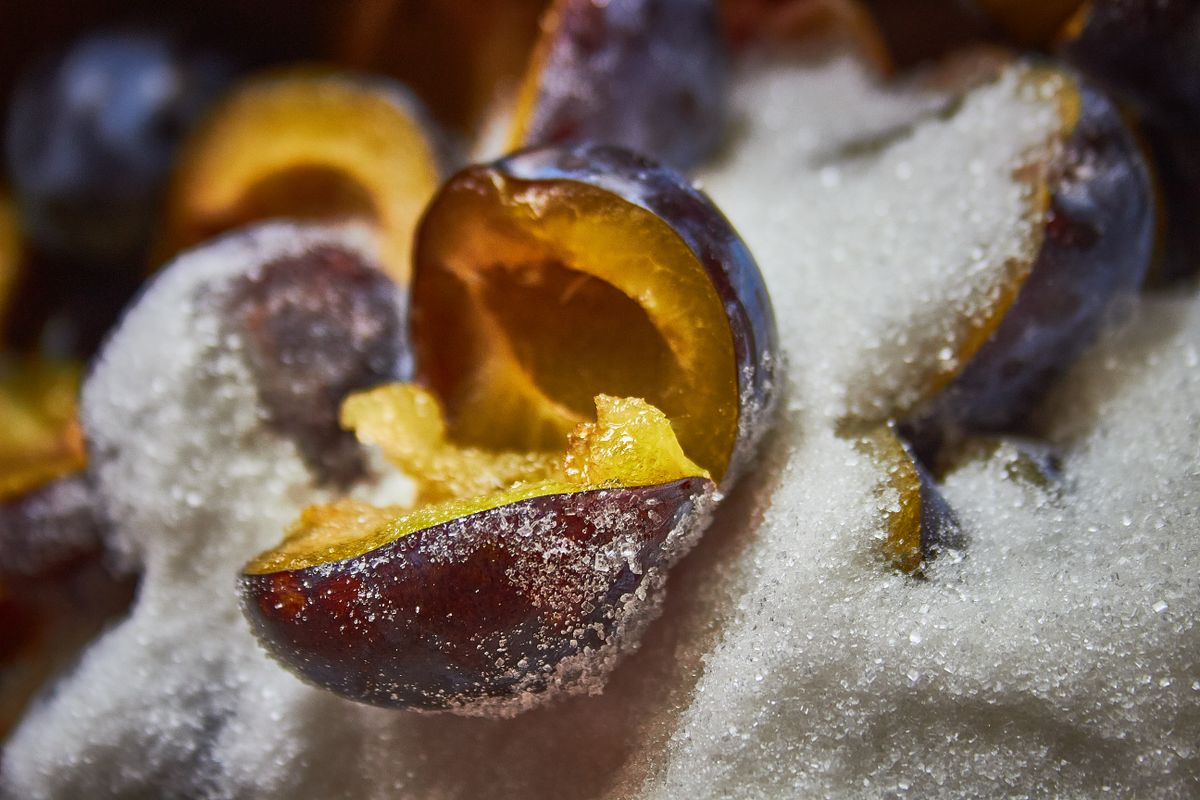
Roasted plums make a more rounded smoothie than raw plums because the flesh softens and the juices become concentrated. Their skins contribute colour and a little tartness, keeping the drink from tasting flat. This is particularly useful when you have a batch of plums that are ripe but not especially fragrant.
Use a snug baking dish. Spread widely across a large tray, the modest amount of juice can evaporate and burn before the fruit becomes tender. The tablespoon of water gives the fruit a gentle start; it is not meant to become a poaching liquid. Check towards the end because small plums soften faster than large ones.
Chill the fruit before it meets the yoghurt
Do not put hot roasted fruit into a sealed smoothie blender. Apart from the pressure risk in machines not designed for hot food, it would warm the dairy ingredients and produce an unpleasantly tepid drink. Transfer the plums to a shallow container so they cool more quickly, and refrigerate within two hours of cooking.
The total time is an estimate because chilling speed depends on the container and fridge. Cold fruit is the important endpoint, not the clock. Making the roasted plums the previous day is the easiest approach. Blend in the roasting juices as well as the flesh: they hold much of the flavour and account for the sugar already in the recipe.
Make the roasting step work for your fruit
The stated roasting time is a guide, not a reason to ignore the dish. Small, very ripe plums may soften before 20 minutes; large firm ones can need a little longer. Look for flesh that yields easily to a spoon and juices that have thickened slightly. The skins can wrinkle, but the sugar and juice should not turn black around the edges.
If the dish is drying out before the flesh softens, add a tablespoon of water around the fruit. If the fruit has released a great deal of thin juice, leave it in the oven a little longer while watching closely. Do not move the dish directly from a hot oven into a cold glass container that is not designed for that temperature change.
For an advance batch, roast the fruit with its measured sugar, cool promptly and refrigerate in a shallow covered container once it is no longer steaming. Label it so the cooking time is clear. Use only the amount required for the smoothie and leave the rest chilled. Repeatedly bringing the whole container to room temperature makes storage harder to manage.
A leftover spoonful of roasted plum can accompany plain yoghurt separately, but it should not be returned to the main storage container after serving. The smoothie recipe includes all the roasting juices from its measured fruit; if you divide a larger batch, stir the cold fruit and juices together first so each portion has a similar sweetness and consistency.
What you'll need
- 300 g ripe plums, halved and stoned
- 2 tsp brown sugar
- 1 tbsp water
- 150 g plain yoghurt
- 120 ml cold milk
- 1/4 tsp vanilla extract
Let's make it
- Heat the oven to 180°C, or 160°C fan. Put the plum halves in a small baking dish, cut sides up, and add the sugar and tablespoon of water.
- Roast for 20–25 minutes until the fruit is soft and its juices are syrupy. Let it cool in a shallow container, then refrigerate promptly; chill before blending. Allow about 40 minutes for cooling and chilling, longer if necessary.
- Blend the cold plums and all their juices with the milk, yoghurt and vanilla. Start slowly so the dense fruit does not splash up the jug.
- Taste and add a splash more milk if needed. Divide between two glasses and serve cold.
Make it your own
Use damsons only after careful stoning and taste before blending; their sharper flavour may need more sweetening.
A small pinch of cinnamon can replace vanilla, but avoid both in large amounts because roasted plum should remain dominant.
Keeping it fresh
Cool cooked plums quickly and refrigerate within two hours at 5°C or below. Use the cooked fruit within 48 hours. Once blended with dairy, serve promptly or keep covered and use within 24 hours, respecting earlier ingredient dates.
Allergen notes
Milk