Freeze part of the melon, not all of it
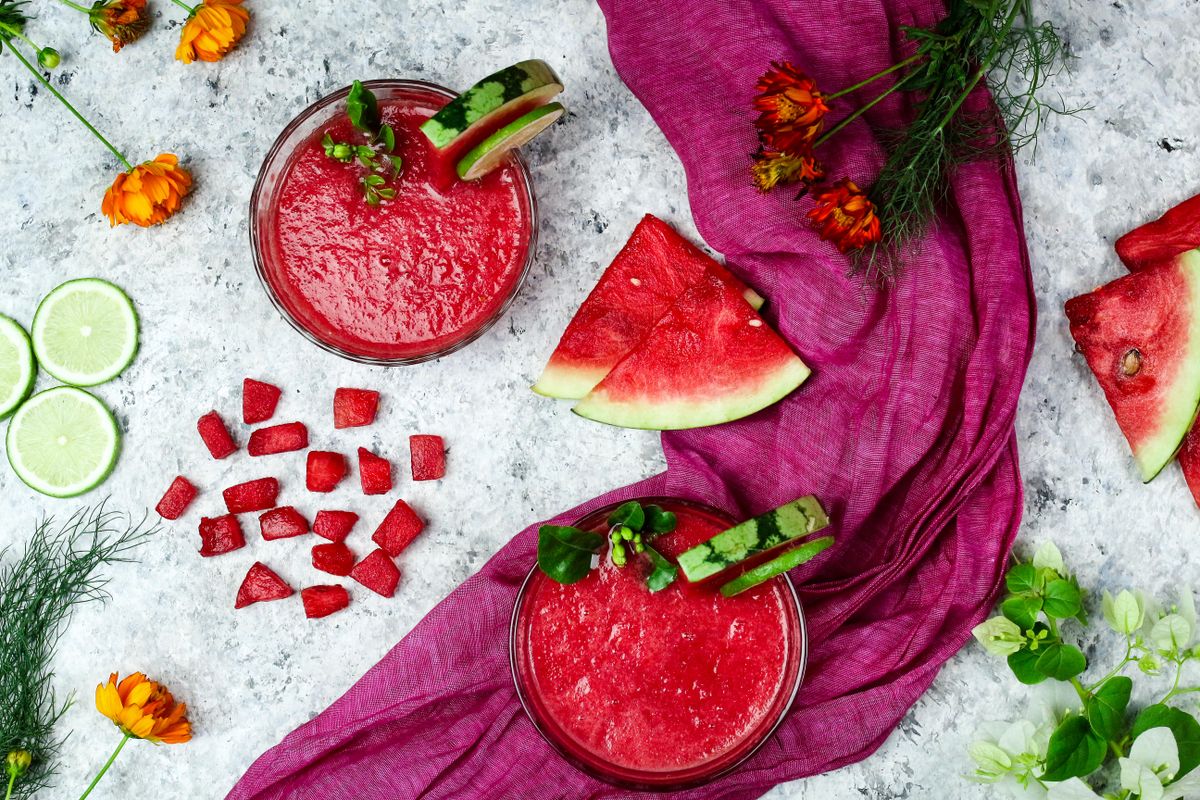
Watermelon contains plenty of water, so it can make a refreshing slush without a large scoop of separate ice. Freezing only part of the fruit gives the blender both solid pieces and a liquid base. A jug full of rock-hard melon can jam the blades, while entirely fresh melon produces juice rather than slush.
Cut small, even cubes and spread them apart before freezing. Once solid, they can be transferred to a bag for later use. A single frozen block is difficult to blend safely and encourages you to add too much water. The three-hour freezing time is a minimum estimate; thick cubes or a crowded freezer may take longer.
Acidity makes the flavour clearer
Watermelon can taste surprisingly muted when very cold. Lime provides contrast without requiring much sugar. Add the optional teaspoon only after tasting the fresh melon, and do not expect lime to compensate for fruit that was bland to begin with. A ripe, sweet watermelon is the main ingredient and the main source of flavour.
Mint should be an accent, not a green purée. Four small leaves give a light herbal note and a few flecks. If your mint is especially strong, use fewer. This slush changes texture rapidly as it stands, so have the glasses and serving spoons ready. A chilled glass buys a little time, but it will not preserve the frozen texture indefinitely.
Use the machine's limits as part of the method
Frozen melon can be hard enough to challenge a blender even though fresh melon feels soft. Check the manufacturer's instructions for frozen fruit and ice before starting. If the machine is not suitable, use chilled melon and serve the mixture as a fresh watermelon drink instead. Do not try to force a slush texture by feeding large frozen chunks into unsuitable blades.
In a suitable machine, begin with the unfrozen melon base so there is liquid around the blades. Add the frozen pieces gradually if the jug is small. Stop and allow the fruit to soften very briefly if it will not circulate, rather than immediately pouring in all the optional water. Water solves movement but also makes the flavour weaker.
For several people, freeze the fruit in clearly weighed portions and blend close to serving time. A finished slush stored in the freezer becomes a harder mass and is not immediately ready to pour. If you promptly freeze an untouched leftover portion, soften it briefly in the fridge and eat it as a frozen dessert, rather than forcing a solid block through a blender. Do not expect the original slush texture to remain unchanged.
What you'll need
- 400 g seedless watermelon flesh
- 1 tbsp lime juice
- 1 tsp caster sugar, optional
- 4 small mint leaves
- 50 ml cold water, only if needed
Let's make it
- Wash the outside of the watermelon before cutting, then remove the rind and any hard seeds. Cut the flesh into small cubes and freeze 250 g in a single layer for at least three hours.
- Chill the remaining 150 g of watermelon. Blend this unfrozen fruit with the lime juice and optional sugar to make the liquid base.
- Add the frozen cubes and mint. Pulse in a blender suitable for frozen ingredients until the mixture resembles a fine slush; add a little water only if the blades cannot circulate it.
- Divide immediately between chilled glasses and serve with spoons or wide straws.
Make it your own
Leave out mint for a simpler watermelon-and-lime version.
Lemon juice can replace lime, although the aroma will be less floral. Add gradually and taste rather than assuming the same acidity.
Keeping it fresh
Serve immediately; the slush becomes juice as it melts. Freeze prepared melon cubes in a sealed container for up to one month for best quality. Keep cut unfrozen melon covered and refrigerated, following its pack guidance.
Allergen notes
No major allergens intentionally included; check packaged ingredients